From mobile pyrolysis to digital control: students' solutions for waste-free rice husk processing
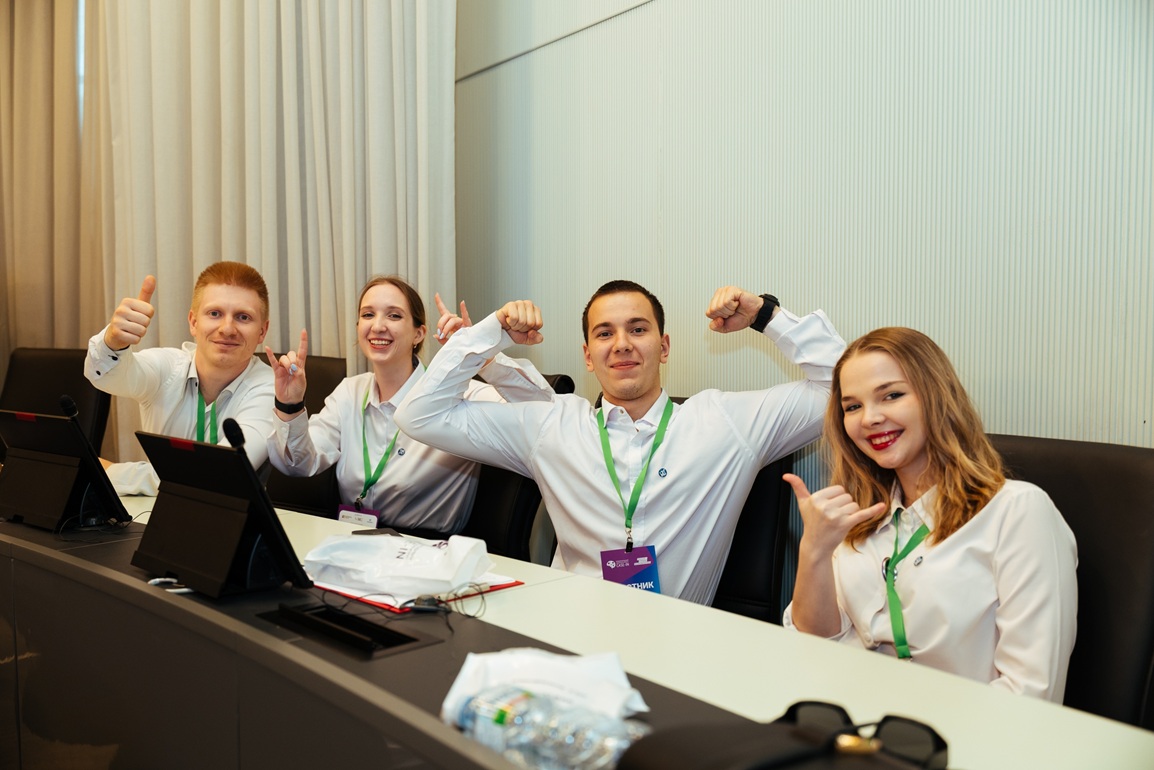
Students from the Omsk and Sverdlovsk regions proposed engineering solutions to turn rice husks from agricultural waste into valuable raw materials for the chemical industry. The finalists of the Project Engineering direction of the XIV season of the International Engineering CASE-IN Championship, which is held with the support of the presidential platform "Russia – the Land of Opportunities", have developed full-cycle waste-free production projects focused on the production of products in demand by the petrochemical industry.
The case prepared by SIBUR was devoted to the complex processing of rice husks. The participants were tasked with offering a technology for recycling agricultural waste, which makes up to 20% of the rice harvest, as well as integrating processed products into the company's production chains. The main target products were levoglucosenone (LGO), a renewable platform for the synthesis of biopolymers, and high-purity amorphous silicon dioxide (sio₂), necessary for the production of catalysts and "green" tires.
The winner of the Project Engineering direction of the main season The BRAIN MAX team of the Siberian State Automobile and Road University became the CASE-IN. The students proposed to abandon the transportation of large volumes of unprocessed rice husks and transfer the primary processing directly to the places of its accumulation. Their project is based on mobile pyrolysis plants that allow on-site heat treatment of raw materials. After pyrolysis, the density of the material increases from 120 to 800 kg/m3, which reduces the volume of transportation by almost five times and significantly reduces logistical costs.
Another feature of the project was the production of monolithic sorbents by 3D printing from the resulting biochar, which opens up opportunities for creating new materials for cleaning systems and at the same time expands the company's product line. According to the team's calculations, the basic project scenario provides a payback period of about three years.
"We have presented a comprehensive engineering solution for deep processing of rice husks into high-grade products, from biochar to 3D-printed sorbents and high-purity SiO₂ for SIBUR catalysts. The project is not limited to a laboratory prototype: we have a technological map, an economic model and a specific implementation plan with subsequent integration into the company's chain.", - said the team member Alina Kushnir.
According to Alina, an important part of the work was working out the mechanisms for implementing the technology. "At the championship, it is important not just to propose a technical solution, but to show how it will be implemented: with a clear definition of deadlines, resources, risks, interaction of project participants and with a managed economy. A strong idea without a design build may lose out to a more systematic solution. You need to be able to sell your solution and be ready to answer any question. Our project was developed specifically for practical use. SIBUR came to the championship with a specific task - to solve the problem of inefficient use of rice husks. And our solution can already be used to produce chemical products.", - Alina Kushnir emphasized.
Two prizes were immediately awarded to students of the UMMC Technical University.
"The victories of our students at the CASE-IN are already becoming a good tradition. It is not the first year in a row that university teams have won prizes at the championship of this level. For us, this is a confirmation of the quality of engineering training, and for enterprises, it is confidence in the professionalism of future specialists.", - said the Director of the UMMC Technical University Vyacheslav Lapin.
The silver medalist was the Children of the Dungeon team, which relied on the sustainability of the technological process. The students developed a comprehensive risk management system covering agroecological, biological and industrial factors, and also proposed using Industry 4.0 tools to manage pyrolysis. The use of genetic algorithms and machine learning models, including Random Forest, allows you to adjust the process parameters in real time, ensuring the production of silicon dioxide with a purity of up to 99.8% and at the same time reducing the consumption of chemicals by 10-15%. According to the team's calculations, the proposed technology is highly cost-effective and can be scaled for industrial applications.
The bronze medal was won by the MOTORCHIKI team, It proposed a flexible logistics model of production, providing for a choice between the construction of full-cycle enterprises in the areas of raw material formation and the transportation of pyrolyzate to specialized chemical plants. This approach allows you to adapt the production scheme to the specifics of a particular region and reduce capital costs.
The authors paid special attention to import substitution. The proposed technology provides the production of domestic highly dispersed silicon dioxide with characteristics comparable to foreign analogues, which opens up opportunities for its use in the production of catalysts and other petrochemical products.
According to the Deputy Vice-rector for Research and International Cooperation, Head of the Scientific and Innovation Department of Kuzbass State Technical University named after T. F. Gorbachev By Roman Belyaevsky The finalists' projects demonstrate different approaches to solving the same technological problem.
"The victory of BRAIN MAX is due to the obvious financial efficiency and technological novelty - the use of 3D printing of sorbents, which meets SIBUR's requirement for the introduction of end-to-end technologies. The solution of the Children of the Dungeon team provided the most in-depth study of security and risk management issues, which is critically important for large industrial enterprises. The MOTORCHIKI team has demonstrated an adaptive approach, which is an important factor in the modern economy. The general analysis confirms that the processing of rice husks into high-purity silicon dioxide and levoglucosenone is a highly profitable area with great import substitution potential.", - the analyst noted.
According to experts, the finalists' projects reflect the general vector of development of modern petrochemistry and industrial engineering. The use of mobile pyrolysis, digital process control, artificial intelligence and flexible production schemes simultaneously reduces the environmental burden, increases processing efficiency and expands the production of domestic products with high added value. The students' engineering solutions show that agricultural waste can become a valuable raw material for the modern chemical industry, and waste-free technologies can become the basis for new import-substituting industries.
More news
-
В «Газпром трансгаз Казань» отметили победителей Школьной лиги CASE-IN
11 Nov 2026 -
Автоматизация насосной станции в условиях Крайнего Севера: анализ инженерных решений для автономной эксплуатации
11 Nov 2026 -
Students of Shakhty Automobile Institute – semi‑finalists of the CASE-IN championship
09 Nov 2026 -
Eighth graders from Gusinoozersk received an impetus for professional development at the CASE‑IN championship
06 Nov 2026
Чтобы оставаться в курсе последних новостей, подписывайтесь на нас: