Open qualifying stages help students from all over Russia to participate in the CASE-IN championship and achieve success
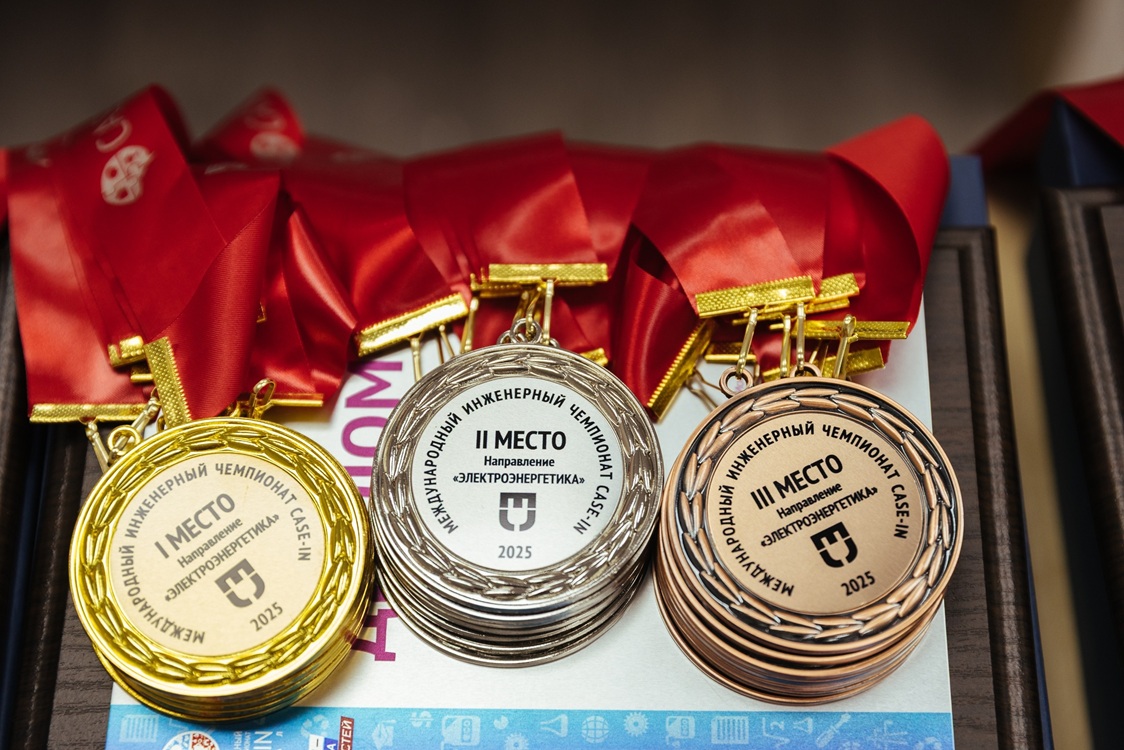
The qualifying stages of the International Engineering CASE-IN Championship are held at the sites of more than 40 universities. However, not all universities accept competitions in each of the 12 industry areas of the championship. In order for students of any university to have the opportunity to prove themselves, the organizers have been holding open remote qualifying stages since 2022. The championship is supported by the Presidential Platform "Russia – the land of Opportunities".
Students of universities where there are no face-to-face competitions in the relevant field can participate in the open qualifying stages. At the same time, the teams solve the same engineering cases of leading industry companies as the participants of the university stages, undergo expert evaluation and get the opportunity to reach the final of the CASE-IN along with other participants. Practice has shown the effectiveness of this format: in the XIV season of the championship, 58 teams reached the finals through open qualifying stages, and 15 of them became winners and prize-winners.
"58 teams made it to the finals of the championship, having passed through a sieve of open qualifying competitions. In the circle of organizers, we call such teams guest teams. Having overcome the additional difficulties associated with fully remote cross-functional work and online protection of solutions, the guys were able to successfully perform and demonstrate their professionalism and outstanding thinking to the experts.", - noted the founder of CASE-IN Artem Korolev.
A vivid confirmation of the effectiveness of the open qualifying stages were the results of several industry areas at once.
Geological exploration: artificial intelligence, drones and mobile laboratories
In the "Geological Exploration" field, the entire podium was occupied by teams that went through the open qualifying stages. The participants were tasked with identifying promising areas for mineral exploration in the Oleneksky district of the Republic of Sakha (Yakutia), offering modern approaches to exploration and logistics in the Arctic.
The champion was the "Ancient Shales" team of the Sergo Ordzhonikidze Russian State Geological Exploration University (MGRI). The champions suggested using a digital assistant based on artificial intelligence, which independently plans the routes of geological expeditions, taking into account the weather conditions and the state of winter shelters.
The silver medalists, the team of "Chthonologists" of the St. Petersburg Mining University of Empress Catherine II, relied on aerial and geophysical surveys using drones flying at an altitude of 15-20 meters, which significantly improves the accuracy of searching for hidden mineral deposits.
The "bronze" Bedrock Bums (MGRI) team has developed the concept of a closed-loop exploration pipeline, which provides for the use of mobile laboratories and modern communication systems that can transmit data over a distance of up to 100 kilometers even in areas without stable satellite communications and analyze sample quality directly in the field.
Mining machinery and equipment: safety without human intervention
The "guest" ""guest"" teams also comprised the top three in the "Mining Machinery and Equipment" direction, partnered by PJSC MMC Norilsk Nickel. The participants had to develop solutions to ensure uninterrupted operation of the pumping station in the Far North.
The winner was the "Alcor 2.0" team from Tyumen Industrial University, which proposed an intelligent pump alternation system, which simultaneously improves equipment reliability and reduces power consumption.
The silver medalist, the "Children of the Dungeon" team of the UMMC Technical University, proposed to abandon the strict maintenance schedule and proceed to repair the equipment according to its actual condition. This minimizes the influence of the human factor and prevents the occurrence of malfunctions.
The bronze medal was awarded to the Six Volt team of the UMMC Technical University. The students have developed a continuous monitoring system for pipelines using a two-kilometer fiber-optic cable, which can detect leaks and record temperature changes with an accuracy of up to five meters. Additionally, the authors provided redundancy of data transmission channels, ensuring stable operation of the system even in case of damage to communication lines.
Biotechnologies: deep processing of plant raw materials
""Guest teams of the "Biotechnology" direction, who worked on technologies for deep processing of plant raw materials on behalf of PJSC Tatneft, also showed good results.
""Agariki ugariki" team of Almetyevsk State Technological University "Higher School of Petroleum" became the winner. The students proposed a technology for deep purification of raw material streams, which makes it possible to obtain glucose concentrate and biostimulants based on humic substances for agriculture.
The ""Bacteriologini"" team from Ufa State Petroleum Technical University took the third place, offering a technology for the "soft" processing of wood chips and the use of immobilized enzymes to reduce the operating costs of production.
Project engineering: waste-free processing of rice husks
In the field of "Project Engineering", the participants, on behalf of SIBUR, developed projects for waste-free processing of rice husks to produce products in demand by the chemical industry.
The BRAIN MAX team of the Siberian State Automobile and Road University became the winner. The students proposed to abandon the transportation of large volumes of untreated husks and use mobile pyrolysis plants directly in the places of its accumulation. This approach makes it possible to significantly reduce logistical costs, and the resulting biochar can be used for the production of 3D-printed sorbents and high-purity silicon dioxide for catalysts.
The bronze medalist was the MOTORCHIKI team of the UMMC Technical University, which proposed a flexible pyrolyzate transportation scheme that allows you to choose between building full-cycle enterprises in raw material clusters and supplying semi-finished products to specialized chemical plants, which increases the economic efficiency of the project and promotes import substitution.
Digital automation: unmanned vehicles and intelligent control
The ""Digital Automation"" podium, which was partnered by AK Altynalmas JSC, also consisted entirely of the teams that passed the open qualifying stages. The participants developed solutions for the implementation of unmanned dump trucks at the "Akbakai" mining and processing plant.
The silver medalist was the unec team.tech of St. Petersburg State University of Economics. The students proved that the use of an intelligent control core makes it possible to perform production tasks with a fleet of only five unmanned dump trucks, whereas with the traditional approach it would take ten vehicles.
The bronze medal was won by the Nomine Bigas team of Peter the Great St. Petersburg Polytechnic University. The authors proposed a robotic battery quick-change system that minimizes downtime, as well as a special hardware "security layer" that blocks potentially dangerous control commands.
Oil and gas industry: new approaches to gas use in the Republic of Sakha (Yakutia)
The GasFlow team of the National Research Tomsk Polytechnic University became the winner of the "Oil and Gas Business" direction. On the instructions of YATEK, the students developed a project for an energy-digital cluster that allows the use of natural gas directly in the production region without the construction of expensive main pipelines. The project provides for local power generation and the creation of data processing centers using the Arctic climate for energy-efficient cooling of equipment.
Petrochemistry: microfluidic synthesis and artificial intelligence
""MILA" team of Kuzbass State Technical University named after T. F. Gorbachev became the silver medalist of the "Petrochemistry" field. The students developed a cluster model of import-substituting production of peroxide initiators, combining microfluidic synthesis, artificial intelligence and industrial cooperation. The solution allows you to quickly switch between the release of various products without stopping production, and the use of digital technologies significantly speeds up the selection of technological modes.
Metallurgy: eco-friendly solutions for the aluminum industry
""""Doped Four"" team of the National Research Technological University "MISIS" became another example of successful performance, which became the silver medalist of the Metallurgy field, partnered by RUSAL. The students proposed an efficient and environmentally friendly approach to launching new aluminum production facilities, receiving high praise from industry experts.
The winners and prize-winners of the open qualifying stages will receive internships in partner companies with the prospect of further employment, preferential conditions for admission to graduate and postgraduate studies at partner universities, as well as participation in youth educational forums.
The stories of these teams show that the open CASE-IN selection stages have become a full-fledged tool for finding engineering talent. Students whose universities do not host face-to-face championship competitions get the opportunity to solve real industry problems proposed by the country's leading companies, reach the finals and compete on equal terms with the strongest engineering teams in Russia. The results of the XIV season confirm the effectiveness of this format: the open qualifying stages not only expand the geography of the championship, but also allow talented students from different regions to present their developments to the professional community. Many of these solutions are already considered by experts as promising for implementation in geological exploration, mining, oil and gas industry, petrochemistry, metallurgy, biotechnology and digital automation.
More news
-
Young people of the capital are invited to take part in the international engineering championship
16 Sep 2026 -
The CASE-IN is recommended by the Ministry of Education of Russia for implementation in schools and universities
08 Sep 2026 -
Determine the future appearance of the CASE-IN: voting for the theme of the XV season of the engineering Championship has started
08 Sep 2026 -
Registration of the autumn CASE-IN competitions and the revival of the engineering school: the main thing from Artem Korolev's social networks
06 Sep 2026
Чтобы оставаться в курсе последних новостей, подписывайтесь на нас: