Artem Korolev's Social Media Digest: From Female Engineering to Growth Management
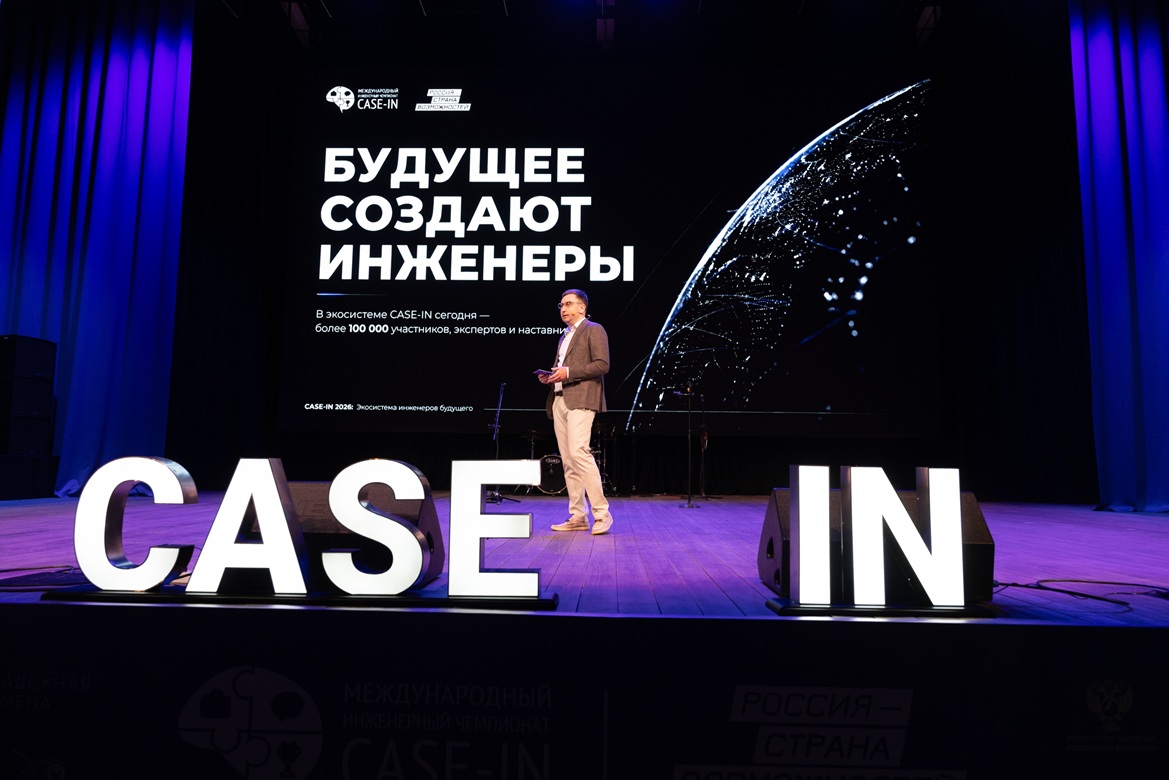
Last week, Artem Korolev shared his thoughts on stereotypes in engineering, flexible management methodologies and the evolution of corporate values on his social networks. So that you don't miss the most important things, we have compiled the key theses in one digest.
In the first publication of the week, the founder of CASE-IN speculated about the role of girls in solving engineering cases.
According to the statistics of the organizing committee, representatives of the beautiful half of humanity participate in the championship almost on a par with young men and often win championship cups.
"In 2025, the Creators of Ideas team from Gymnasium No. 9 in Svobodny, Amur Region, became the champion of the School League. In the same year, the all-female Cyberbiosecurity team from the AGTU Higher School of Petroleum won the debut direction of Biotechnology, – He told me Artem Korolev. – In 2026, another women's university team, Agariki Ugariki, took the first place in the same direction. There is an illustrative example in architectural and construction design. There were six girls and one boy in the BROIZ team at St. Petersburg Polytechnic University. In 2023, she became the first champion of the direction created jointly with the Metropolis company. Today, more than half of the BROIZ participants work in the Moscow and St. Petersburg offices of Metropolis.
If girls are given the opportunity to try themselves not just in studying technical disciplines, but in solving real engineering problems, the familiar idea of engineering as a predominantly male profession will begin to change, Artyom noted.
The Reliable Change Foundation has been implementing projects using Scrum for about ten years. This technology is based on a fairly simple idea: there is a general list of tasks, the work is divided into short periods – sprints, and the team regularly summarizes the results and determines the following priorities.
"When we started implementing Scrum, we tried to use almost everything that the classical methodology offered. Over time, it became clear that we simply didn't need some of the tools., – He told me Director of the foundation. – In the end, we left something that really works for our team. Each project has a common backlog – a single list of all tasks. We work in weekly sprints: the team sets priorities for the week, and at weekly meetings we analyze the results, problems, and next steps. It turned out to be our own hybrid of Scrum and familiar project management."
The methodology should help to manage the project, and not the project should adapt to the methodology, the author summed up the topic.
From In an interview with Hoff co-founder Mikhail Kuchment, Artem Korolev highlighted the main idea: As the organization grows, the task of the head also changes. Instead of doing everything himself, he should assemble a strong team and build a system that can work without his constant participation.
"In the early stages of the CASE-IN, I could personally immerse myself in almost every task. And then it was really necessary.: "There was still no established system, distributed areas of responsibility and heads of individual areas," he recalls. "But it is interesting that the approach that helps an organization grow at the start begins to limit its growth at a certain point. If every significant decision has to go through one person, the speed of the entire team is determined by their personal workload. Employees get used to waiting for approval, managers don't get enough independence, and the founder gradually becomes the main bottleneck of his own organization. At the same time, it is psychologically more difficult to transfer tasks than it seems."
Next, Artyom I gave you some advice how to find a way out of this situation.
After reviewing the Index of Attractiveness of regions for Young People from the Agency for Strategic Initiatives, Artem Korolev concluded that It's not just businesses that compete for a young engineer today.
"A young specialist does not choose a separate vacancy, but a possible life in the region, especially if it is necessary to move for the sake of work. In my opinion, the offer to a young engineer should include not only a position and a social package, but also a clear trajectory of life: a career path, help with housing, access to a professional community, etc.," he stressed and added that he will soon share the results of the foundation's research on this topic.
The next post is about the values of the foundation, one of which has long been the "family".
"When an organization is small, this model really works: everyone knows each other well, experiences successes and difficulties together, and helps each other far beyond their responsibilities. – Artyom told me. – But the team was growing. And at some point, I realized that it was becoming increasingly difficult to manage an organization of several dozen people based on the family principle. In an organization, sometimes you have to say that a person is not coping. Change his role. Demand a result. Break up if you don't suit each other professionally anymore. Family logic makes such decisions much more difficult."
Therefore, together with the development of the fund transformed and the values of the foundation, and the "team of professionals" came to the fore.
At the end of the week, in the traditional section "What to read right now" – three books with a tense plot.
Subscribe to Artem Korolev in Vkontakte and Telegram in order not to miss important news about youth projects and career development opportunities.
More news
-
Artem Korolev gave advice to managers and novice specialists on social networks.
30 Aug 2026 -
Energy as a vocation: the story of the CASE-IN Championship winner from KuzSTU
24 Aug 2026 -
SibADI CASE-IN Championship winner celebrates 96th birthday
21 Aug 2026 -
The winners of the CASE-IN championship from KuzSTU have confirmed their professionalism at the Youth Global Forecast of Energy Development
17 Aug 2026
Чтобы оставаться в курсе последних новостей, подписывайтесь на нас: