How to use Yakutia's gas without main pipelines: solutions of the winners of the engineering CASE-IN championship
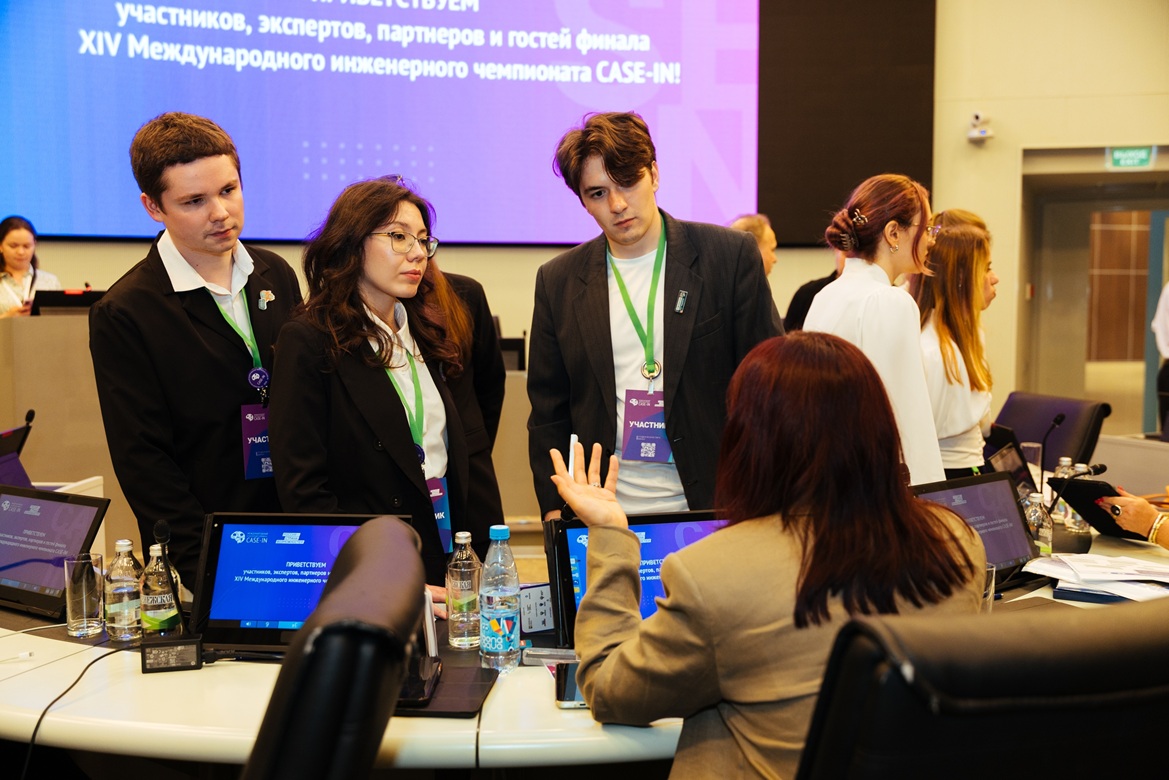
Students from the Tomsk Region, the Republic of Tatarstan, and Moscow proposed engineering solutions for more efficient use of Yakutia's gas resources. At the final of the XIV season of the International Engineering CASE-IN Championship, which is held with the support of the Presidential Platform "Russia - the Land of Opportunities", future engineers have developed projects combining gas generation, digital infrastructure and modern data processing technologies.
The case study of the Oil and Gas Business, prepared by YATEK, was devoted to one of the most pressing tasks of the industry - the use of natural gas directly in production areas without the construction of expensive main pipelines. Instead of transporting gas, the students were asked to find ways to create energy-digital clusters where natural gas is used to generate electricity that powers data centers.
"Our company has been a strategic partner of the CASE-IN championship since 2022. We are not just creating cases, we are opening doors to the world of real engineering challenges of the gas industry.", - said the Deputy General Director for Personnel Management and Social Policy of PJSC YATEK Tatiana Merzlyakova.
The GasFlow team of the National Research Tomsk Polytechnic University became the winner of the competition. The students suggested using the harsh climate of Yakutia as a competitive advantage. Instead of energy-intensive server cooling systems, they have provided for the use of fracking technology - outdoor Arctic air cooling, which significantly reduces the energy consumption of data centers.
The project also takes into account the specifics of construction in the northern regions: the authors analyzed the impact of permafrost on infrastructure, logistics of equipment delivery and proposed a combined generation scheme based on gas piston and gas turbine installations. According to experts, the project is distinguished by a high level of engineering, realism and the possibility of practical implementation.
"Our decision can be described as the most technologically sound one. We have also worked out the economic component very carefully, so we believe that the project is highly likely to be implemented.", - said the members of the GasFlow team.
The silver medalists were students of Almetyevsk State Technological University Higher School of Petroleum, who performed under the name "Manifold Schwarzenegger". The team has relied on intelligent management of the oil and gas infrastructure. Artificial intelligence models have been integrated into the project, capable of predicting possible malfunctions of gas wells in advance and reducing equipment maintenance costs. At the same time, the students developed the concept of a large data processing center designed for further scaling.
According to the participants, the work on the case made it possible to look at the gas industry through the prism of the digital economy.
"The case offered to us opened up from an unexpected side. Thanks to him, the team got acquainted with a new direction - the data center market. The materials studied helped to understand modern technologies, while not limiting engineering to a rigid framework.", - said the team member Evgeny Marushev.
The bronze medal was won by the Yin and Yang team of the Financial University under the Government of the Russian Federation. The students focused on the economic sustainability of the project. They have developed a financial model that takes into account the entire lifecycle of a data center: the timing of updates to computing equipment, changes in the cloud services market, and a long-term return on investment. This approach makes it possible to maintain the competitiveness of the digital infrastructure even with changing market conditions.
According to experts, all three teams have proposed different approaches to solving the same problem. The winners from Tomsk focused on the engineering feasibility of the project and adaptation to the conditions of the Far North, the team from Tatarstan - on the use of artificial intelligence for infrastructure management, and representatives from Moscow - on the financial stability of the project throughout its life cycle.
The experts also noted the general trends typical for most of the final projects. The participants preferred domestic engineering solutions, used free outdoor cooling, took into account the specifics of the operation of facilities in permafrost conditions, and proposed technologies that could increase the energy efficiency of future data centers.
The finalists' developments show that modern projects in the oil and gas industry already go far beyond the extraction of raw materials. Future engineers offer comprehensive solutions combining energy, digital technologies and artificial intelligence, opening up new opportunities for the development of the northern regions and more efficient use of Russia's natural resources.
More news
-
Development is the ability to go beyond the usual limits: the story of a CASE-IN winner from Kuzbass
10 Aug 2026 -
Why digital simulators are becoming the new standard for engineering training
06 Aug 2026 -
The winners of the CASE-IN championship from SibGIU told about their decision
04 Aug 2026 -
The CASE-IN championship helped a graduate of KuzSTU to become a professional
03 Aug 2026
Чтобы оставаться в курсе последних новостей, подписывайтесь на нас: