"Biotechnologies" on CASE-IN: how students tame wood chips and build the economy of the future
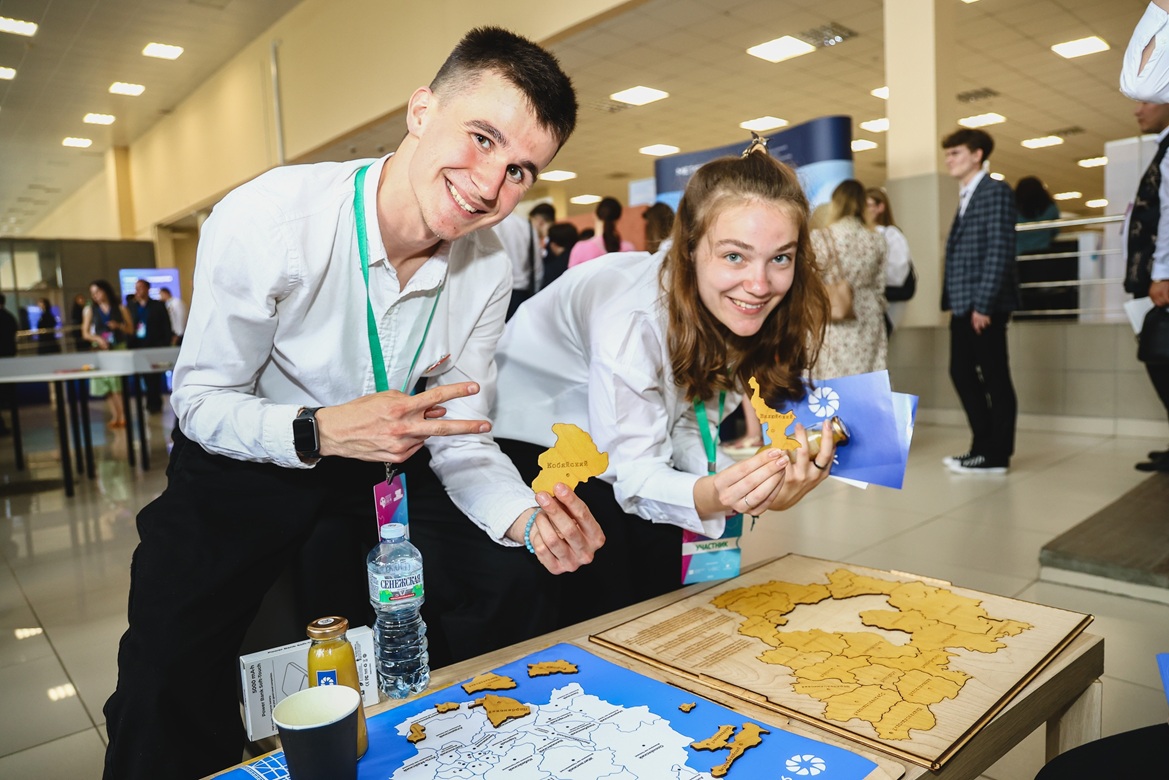
The International Engineering CASE-IN Championship is Russia's largest competition for future engineers, which has been gathering talented students from all over the country since 2013. The championship is included in the Presidential Platform "Russia is a Land of Opportunity" and is included in the "Science to Win" initiative of the Decade of Science and Technology plan. The field of "Biotechnology" appeared in the championship line-up only in 2025, but it has already managed to loudly declare itself. The initiator of the track's creation was Tatneft, which became its strategic partner and main inspiration from day one.
The first season has set the bar high for biotechnologists. In 2025, the participants had to develop a full—cycle carbon dioxide processing technology, a task that lies at the intersection of ecology, energy and industrial biotechnology. The final of the XIII season brought together 57 youth teams from Russia and neighboring countries in Moscow, and the strongest students of specialized universities competed in the new field of Biotechnology. The partner was PJSC Tatneft, whose specialists evaluated the work and conducted career consultations for the participants.
The first place in the 2025 finals was won by students of Almetyevsk State Technological University Higher School of Petroleum. The team of Samara State Technical University took silver, and the Russian State Agrarian University, the Timiryazev Agricultural Academy, took bronze. The three universities have three different approaches, and each has proven that biotechnology is becoming one of the most promising engineering disciplines.
In 2026, Tatneft, through its subsidiary NPO TN-Biotech LLC, prepared a new challenge for students — even more ambitious and closer to the real needs of the business. The main theme of the XIV season is "Technologies of the Future," and the task in this area was to propose a cost—effective technology for the deep processing of wood chips or other types of plant biomass into high-value-added products. The participants had to think through all the stages, from choosing a hydrolysis method to purifying and processing non—food sugars and lignin. And all this is done within a tight time frame: teams are given only 10 days to solve the case.
The qualifying stages of 2026 brought together the strongest students from the country's leading specialized universities. The captain of the team from KNRTU "Biotechnological Impulse" Antonova Kseniya talks about the starting conditions: "The task was to recycle wood chips or any plant waste into valuable products, while observing the technological parameters that are specified in the case." The most difficult thing for the guys was not just to come up with an innovative idea, but to build a full-fledged technological scheme from the beginning to the end of the process. "The plus is to solve everything in 10 days. It's quite difficult," Ksenia admits. He adds that the task has become more difficult compared to last year, but there have been more clarifications from the compilers of the case — the team understood exactly what was expected of them.
KNRTU students called their decision "Gentle hydrolysis". They suggested treating birch chips and sawdust with weak acetic acid (10%) when heated. The acid breaks the bonds between cellulose and lignin, but it does not burn sugar. The technology yields two products: a solid residue — almost pure cellulose — and a liquid fraction with hemicellulose C5 sugars.
The BioSveg team from Timiryazev Academy chose a different path. Captain Marina Loginova describes the task as follows: "It was necessary to propose a method for processing raw materials containing lignin, cellulose and hemicellulose, which are waste from the wood processing industry, to produce value—added products." At first glance, the task seems simple — just figure out what you can get from these fractions. But the organizers issued a number of strict restrictions, and the team spent quite a long time choosing a solution that would suit all parameters. "In addition, we wanted to offer really valuable products whose markets are in demand in Russia and other countries," adds Marina.
As a result, Loginova's team proposed organosolvent pretreatment, which makes it possible to obtain high-quality lignin. Students plan to use this lignin to produce carbon fiber for high-tech industries. In parallel, the technology provides furfural, a promising product for the chemical industry, and citric acid for the food industry. "All these products are in demand in the Russian Federation," Marina summarizes. She notes that the tasks for 2026 have become more complex and practice-oriented compared to last season, and this only spurs interest: "Biotechnology is a very promising field, it can find applications in processing, which will help create a closed—loop economy."
The team leading the rating in the field of Biotechnology, Agariki-Ugariki from Almetyevsk State Technological University Higher School of Petroleum, led by Ulyana Ushmayeva, proposed perhaps the most unexpected raw material concept. Instead of wood chips, the students used straw from the most common grain crops as a basis — agricultural waste, which is available in large quantities throughout the country. Ulyana explains the complexity of the task: "One of the most difficult points is the choice of the most effective technology in view of the huge number of solutions already studied and described in the literature."
Their solution is to use amines as solvents and wash the pretreated raw materials with water under vacuum. This reduces the cost of water and energy resources, as well as reduces the loss of end products. "This year's assignment has a huge number of solutions that have already been described in the literature or are just being studied. This provides a choice for selecting the most optimal technology, but at the same time complicates the solution of the case due to the huge number of potential options," Ulyana shares.
For Tatneft, as a company developing its own biotech cluster in Tatarstan, CASE-IN is a real tool for finding and educating future personnel. That is why the specialists of Tatneft and NPO TN-Biotech personally evaluate the work of students, conduct career consultations for them and select the best in the personnel reserve.
The participants themselves confirm that the championship provides something that cannot be found in the regular curriculum. Ksenia Antonova, captain of the Biotech Impulse team, identifies two main acquisitions: "Experience in public speaking and prompt, well-coordinated work in a fairly short period of time." For her, this is an opportunity to test herself in conditions as close as possible to real engineering design.
Marina Loginova, the captain, formulates it even more deeply: "The Championship confronts participants with specific problems existing in industries, and also helps them understand that the organization of processing production is a complex process in which many details must be taken into account." She emphasizes that the CASE-IN cases clearly demonstrate that the future belongs to interdisciplinary specialists. "The desire to understand something that is not directly related to your specialty is an advantage," Marina is sure.
This season has become special for Ulyana Ushmayeva. "This is the third case championship for me, so I can say that I have a little experience in solving such problems. I have never been able to reach such a high level and reach the finals before, so I consider this my new achievement," says the captain of the leading team. She greatly appreciates the competitive atmosphere in case championships, the opportunity to offer her scientific ideas and explore new topics from scratch in a short time. "I believe that such events give a huge boost to professional development," Ulyana sums up.
The final of the XIV season of the CASE-IN International Engineering Championship in all areas, including biotechnology, will be held in Moscow from May 20 to 22, 2026. The winners and prize-winners will receive more than just diplomas: they will receive preferential conditions for admission to master's and postgraduate studies at leading partner universities, as well as the opportunity to complete paid internships and internships in partner companies with the prospect of further employment. It's already clear: The new season will bring more than one bright engineering solution to the industry, and participants will gain invaluable experience working on real business challenges. And who knows, perhaps it is the technology that was born in a student audience during ten days of hard work that will form the basis of a new production facility at one of Tatneft's enterprises in a few years.
More news
-
Two AmSU student teams reached the finals of the CASE-IN Engineering Championship
16 May 2026 -
The future power engineers of the Perm region made it to the finals of the CASE-IN championship
15 May 2026 -
PJSC MMC Norilsk Nickel provides career opportunities to participants of the CASE-IN championship
15 May 2026 -
The impetus for a successful career: registration for the International Oil and Gas Youth Forum continues
14 May 2026
Чтобы оставаться в курсе последних новостей, подписывайтесь на нас: