Sergey Tsivilev: the development of the method of the Russian engineering school is necessary to achieve technological leadership in the fuel and ener
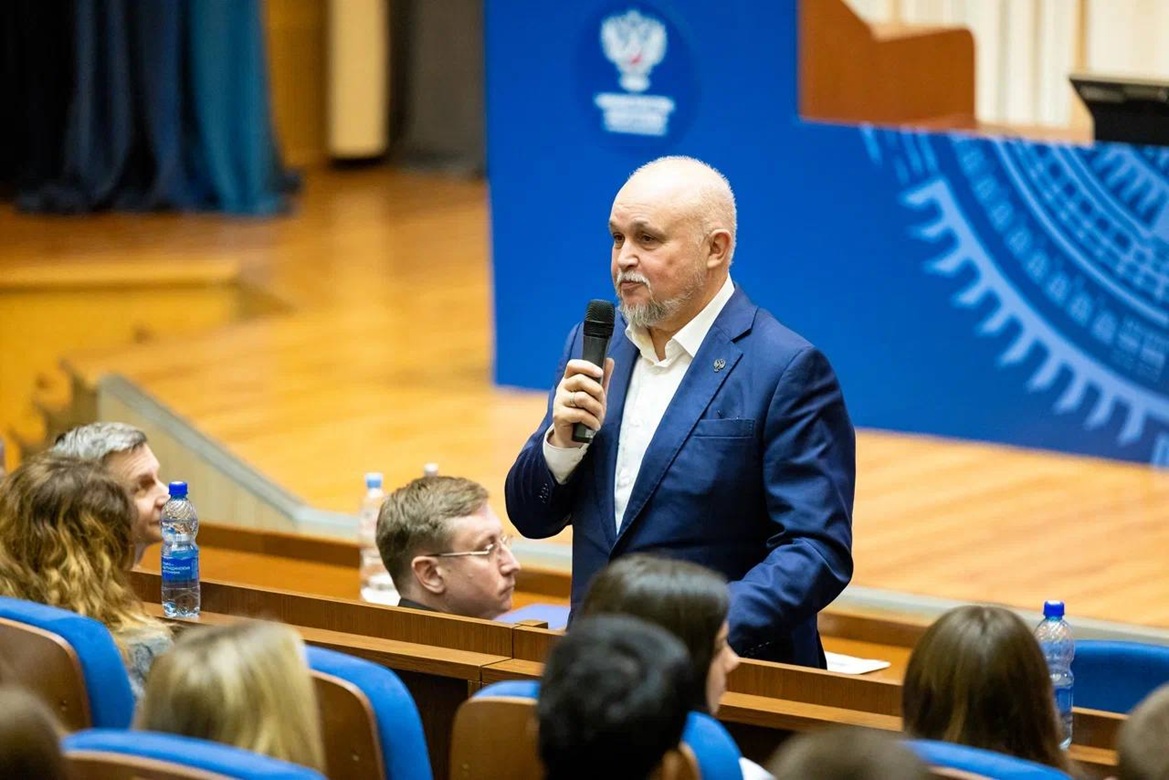
A seminar on the methods of the Russian engineering school in personnel training was held at the Ministry of Energy under the leadership of Sergey Tsivilev. The Minister noted that the personnel agenda is a prerequisite for achieving technological leadership. The Minister said that the discussion of this topic will continue within the framework of the strategic session on the training of engineering personnel, led by the Chairman of the Government of the Russian Federation Mikhail Mishustin.
In his report, the Head of the Ministry of Energy outlined the importance of reviving the system of engineering personnel training. He cited as an example the method proposed by Russian engineer Dmitry Sovetkin, which involves the sequential passage of the steps "worker — technologist — engineer".
"As a result, there is a person who understands the entire technological chain, how all its parts work. The training of an engineer should begin from childhood, from kindergarten, with the help of a mentoring system until the person himself becomes a mentor," the Minister stressed.
Artem Korolev, Director of the Reliable Shift Charitable Foundation, spoke about early career guidance as a basis for training engineering personnel. The speaker spoke about the Energy Classes project, an early career guidance system for identifying and developing engineering thinking among schoolchildren. He said that there are currently 843 energy classes in Russia, where 20,405 schoolchildren study. 41 fuel and energy companies are involved in the project, including Rosatom, Rosseti, Rosneft and others.
"Energy classes are a testing ground where students try on their future profession through engineering and technical creativity, gain in–depth knowledge of relevant subjects and choose a learning path in the future," the speaker noted.
Elvira Fomina, Head of the Administration Service of the Alabuga educational cluster, spoke about the application of the experience of the Russian engineering school in the model of dual vocational training in the field of secondary special education at Alabuga Polytechnic.
"We have built a dual training model at Alabuga Polytechnic: Students spend 70% of their time in practice, including at cluster enterprises, solving real production problems, and only 30% is devoted to theory. Students of the dual program are employed by the company's staff from the first year and begin to learn professional skills and develop managerial functions through tournaments in personal and team form. This approach allows us to train not just specialists, but technological entrepreneurs — people who will be able to manage factories and manufacturing enterprises," the speaker said.
Marat Rudakov, First Vice-rector of the St. Petersburg Mining University of Empress Catherine II, spoke about the main challenges and prospects in the training of engineering personnel in higher education institutions. He said that the Mining University, as part of a pilot project and the creation of a Corps of Mining Engineers, abandoned the Bologna system, switching to a new 6-year training model for engineering specialties. At the same time, during their studies, students master 8 additional competencies, study 2 working professions related to their chosen specialty, such as a driller's assistant, a drilling rig operator, an oil and gas production operator, and many others. The speaker said that after the introduction of the new educational approach, students' academic performance increased from 76% to 92%, which is due to the increased motivation of the students.
"A modern mining engineer is not only about deep theoretical knowledge. It is important to have working specialties, professional competencies, as well as communication skills and motivation to study constantly. After all, we understand that our graduates are future managers who will take senior positions in laboratories and industries in our country," the speaker emphasized.
Alexey Ponomarenko, Deputy General Director and Director of the Engineering Competence Unit at Rosatom Corporate Academy, spoke about the challenges in training a new generation of workers and engineers for the nuclear power industry.
"Technological leadership today is based on human resources: 20% of new specialties are not available on the labor market, while 90% of current staff need to be retrained. At Rosatom, we are responding to this challenge systematically. Today, more than 300,000 of our employees are trained annually, 120,000 of them are young professionals. But the main thing is that all our educational initiatives are aimed at creating a continuous system of personnel training capable of ensuring technological sovereignty," the speaker noted.
The seminar was attended by teachers and students of specialized higher educational institutions, who were able to participate in the discussion and ask questions to the Minister and the speakers.
More news
-
T Plus young power engineers to develop technologies of the future at the CASE-IN Championship
24 Apr 2026 -
Altynalmas - national partner of the CASE-IN Championship
24 Apr 2026 -
SIBUR‑Kstovo is at the top of engineering excellence: winning the CASE—IN cemented its status as a leader in talent development
23 Apr 2026 -
Early career guidance is the key to personnel training: Artem Korolev reported to the Minister of Energy of the Russian Federation on the implementati
23 Apr 2026
Чтобы оставаться в курсе последних новостей, подписывайтесь на нас: