CASE-IN in Magadan: innovative and technological
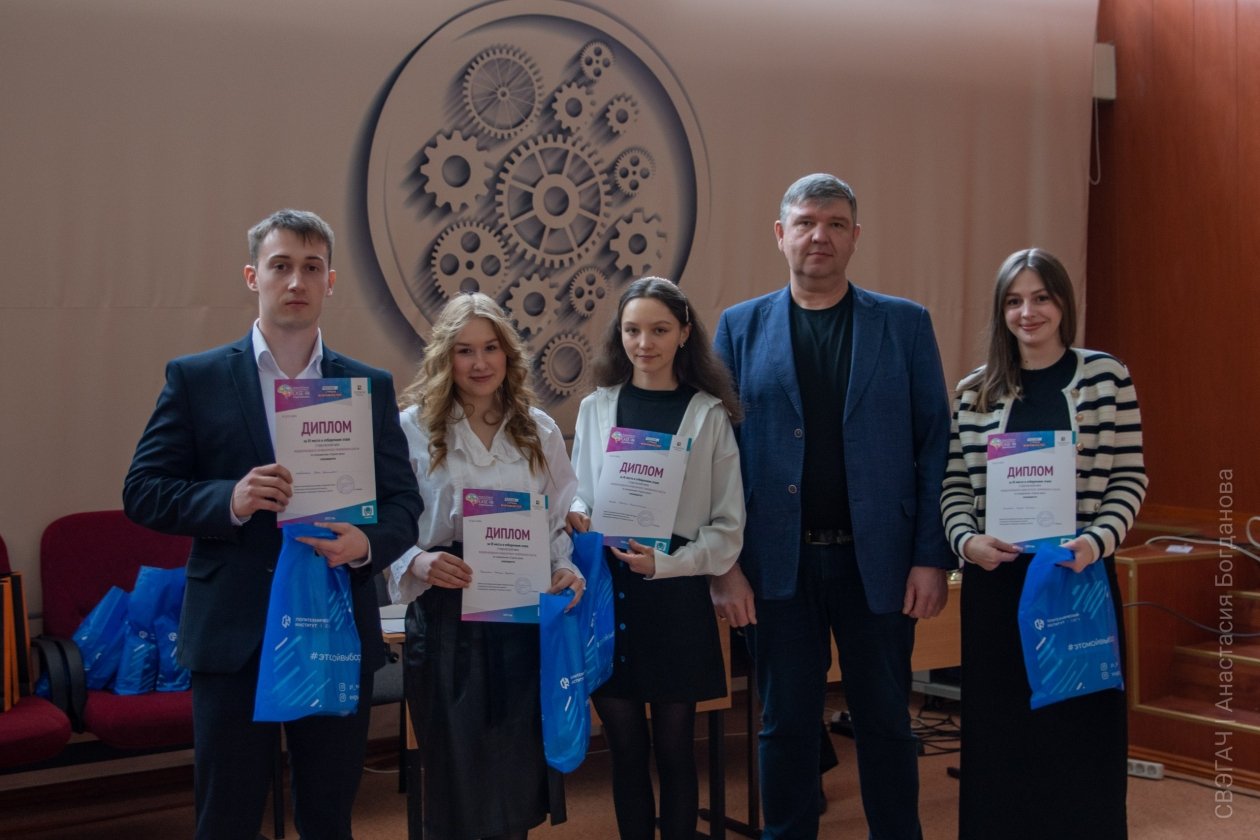
The Polytechnic Institute of Northeastern State University (NESU) had the most innovative atmosphere last week. The qualifying stage of the Student League of the XIII season of the International Engineering CASE-IN Championship was held here. The theme of the new season is "Technological Innovation".
The participants presented comprehensive solutions related to the improvement of drilling and blasting operations in the fields of the joint-stock company ALROSA (Diamonds of Russia-Sakha). Two teams repeated the success of the last championship: Minecraft students took silver, and the Power Ranger team took gold. The expert assessment of the competitive works was given by representatives of the Ministry of Natural Resources of the Magadan region and specialists from mining companies, including Polymetal.
"There are a lot of modern technologies that need to be implemented in production," says Maxim Kuzmenkov, senior lecturer at the Department of Digital Engineering at St. Petersburg State University. — Future engineers presented their original view on the problem. It was also very interesting to me because during my studies at SVU I participated in the CASE-IN four times. During the preparation for the championship, you learn a lot of useful information outside the university course. Back in Polymetal's departments, we were shown a lot of analogs and consulted. As a result, a bold flight of fancy mixes well with pragmatic calculations."
The twice winner of the regional stage suggested using ANYmal robo-dogs to reduce downtime of mining and auxiliary equipment. The robot works 24/7, moving autonomously around the quarry. Such a "doggie" can carry out seismic monitoring, control of the installation of an explosive network, and granulometric analysis. It is important that the robot replaces people in high-risk areas: for example, when inspecting unstable ledges, or at treatment plants with increased fracturing.
"There are convincing examples of the use of robo-dogs in underground and surface work, including in Antarctica and the Arctic," says Ekaterina Mikkelsen, captain of the Minecraft team, a 5th—year student at SVU — underground mining of ore deposits. — This is an alternative to drones. Robo-dogs can see perfectly even in the dark, can take pictures instead of surveyors in dangerous places, are not afraid of frost and dust, and collect 10 times more samples than drones. I think this is the most innovative solution."
The Minecraft team, which translates as "mining craft," also presented other solutions to the case. The captain is confident that the greatest effect is achieved with integrated implementation, which will allow ALROSA to reduce operating costs by 20-25%, increase security and reach the Industry 4.0 level.
Sergey Plitschko, an assistant at the Department of Digital Engineering at St. Petersburg State University, notes that in previous years, the cases that needed to be solved included assignments based on the example of specific enterprises. At this championship, a broader approach to the problem was proposed. In addition, the very request for innovation, in his opinion, arouses a special interest among students. So, the "power rangers" approached the task outside the box.
"We decided to approach from the side of motor transport," explains Peter Khrapkov, a 3rd—year student at St. Petersburg State University with a degree in surveying, captain of the Power Ranger team. — And to come in not just like that, but to be proactive. We suggest using a special program to analyze operating hours. Let's say the caterpillar of a car breaks down at the 700th hour of operation. The program allows you to order a part either from the manufacturer or at the company's own warehouse for up to an hour. This is one of the components of a comprehensive case solution. In addition, our presentation offered an electronic positioning system and other innovations."
Power Ranger mentor Sergei Plitschko was pleased with his team's performance. The students suggested using a 3-D printer as part of a comprehensive solution in order to "print" the parts. Moreover, the topic was approached carefully: they presented the architecture of the workshop where such a printer would be, as well as the raw materials — plastic of specific properties. The new product can print a variety of parts for mining equipment up to 2x2x2 meters in size from plastic. And this is not fiction, but the reality of the 21st century.
Ivan Kislov, a leading specialist in open-pit mining at the Magadan branch of Polymetal, participated in such an event for the first time as an expert. He graduated from St. Petersburg State University 20 years ago. There were no such educational championships back then.
"It is clear that students strive for knowledge, besides, many of them are quite familiar with production,— summarizes Ivan Kislov. — The electronic charge well initiation system, which was proposed by one of the winners, eliminates the error in the planned detonation time. These fractions of a second are very important for better ore extraction in the quarry. It is important that future specialists see this. We see potential personnel for our company."
The winner of the qualifying stage gets the right to participate in the next stage of the CASE-IN. The final will be held at the end of May in Moscow. Two years ago, the team of the St. Petersburg State University Polytechnic Institute became the bronze medalist of the International Engineering CASE-IN Championship.
More news
-
The first finalists of the League of Young Professionals have been identified
07 Apr 2025 -
AltSTU students reached the semifinals of the CASE-IN championship
08 Apr 2025 -
Students from St. Petersburg and Dzerzhinsk are semi-finalists of the CASE–IN championship
07 Apr 2025 -
The qualifying stage of the CASE-IN championship was held in the Arkhangelsk region
07 Apr 2025
Чтобы оставаться в курсе последних новостей, подписывайтесь на нас: